Guest Post: Your Legislators Need to Hear From You

By: Beverly Pavasaris
President, Brockton Visiting Nurse Association
President, Home Care Alliance Board of Directors

MA-State-HouseWith six home care-related bills working their way through the State House and budget meetings in progress, now is an ideal time to get to know your legislators and speak with them about the importance of home health in their districts.

Here are four things you can do to make a difference:

Talk to your Representatives

State representative and senators (find them here) rely on informed constituents to help them understand the legislation before them.  Don’t assume that they know what home health care is or why it’s important. Be prepared to educate your legislators or their health care staff. It is well worth your time.

Your congressmen and senators, also have district offices near you, whose staff you can speak with. Make it a point to reach out to them when they are in their home district offices.

Before you contact your legislators, be sure to read up about the home care-related bills proposed in this session (and which the Home Care Alliance endorsed):

  • An Act Relative to Home Health and Hospice Aides (S.1064) sponsored by Senator Richard T. Moore.
  • An Act Establishing a Certificate of Need for Home Health Care (H.1028) sponsored by Rep. Kate Hogan
  • An Act Allowing Out of State Physicians to Order Home Care Services (S.1042) sponsored by Senator Michael Knapik
  • An Act Relative to Telehealth (Senate Docket 1771) sponsored by Senator Harriette Chandler
  • An Act Relative to Pediatric Home Care Services (H.1007) sponsored by Rep. Michael Brady
  • An Act Relative to Vehicles of Home Health Clinicians (H.1864) sponsored by Rep. John Mahoney

Be sure to contact both your personal representatives – i.e., those who represent the district you live in – and those who represent the district where your business is located.

Schedule a Home Visit

Invite legislators – both state and federal – to come with you on a home visit. Seeing how home care works is more powerful than hearing description over the phone, and also gives them a chance to meet with constituents and get a good photo op.  If you would like assistance in setting up a visit, contact the Alliance’s James Fuccione.

Recruit Your Board & Employees

Your board members and employees can also be powerful advocates for home care. Inform them about the issues and have them make phone calls to their representatives as well.

Attend Lobbying Events

  • March 17th through the 20th is NAHC’s March on Washington;
  • Massachusetts Lobby Day at the State House on March 28th; and
  • VNAA Public Policy Leadership Conference is on September 18-19, 2013 in Washington.

If you have any questions about contacting your legislators, contact James Fuccione, the Alliance’s Director of Legislative and Public Affairs.

Good luck and see you at the State House and in Washington!

Return to www.thinkhomecare.org.
Guest Post: Time for Nurse Delegation Bill to Pass

By: Beverly Pavasaris, President, Brockton VNA
President, Home Care Alliance of Massachusetts

Once again this legislative session, the Home Care Alliance of Massachusetts has filed a bill (An Act Relative to Home Health & Hospice Aides) to allow nurses working in home health agencies and hospices to delegate the administration of certain medications to home health aides. Before this would occur, the home health agencies would need to provide training, certify competency skills and  establish documentation protocols according to the nurse delegation model developed by the National Council of State Boards of Nursing. Such regulations, according to the bill, will be drafted by the state’s Board of Registration in Nursing in collaboration with the Massachusetts Department of Public Health and with nursing input.

In past legislative sessions, I have testified in support of this bill as a creative and progressive solution to removing existing barriers that obstruct home health patients from getting needed care. Our legislation recognizes the changing scope of work that can be safely provided by paraprofessionals with appropriate nurse oversight and helps prepare our state for the aging of our population and growth in clients living at home with medical condition that are stable and predictable.

If this bill were to pass we would by no means be in the forefront of this issue.  A number of states, including Oregon and Washington, and most recently Connecticut , have addressed at-home medication delegation, resolving that the need for assistance with managing and administering medications should not drive citizens into nursing homes. Aside from the improved efficiency of care, Connecticut anticipates a $28 million savings per year from their effort to allow certified home health aides to assist nurses with certain tasks.

An obstacle to getting this bill passed has been lack of support from the state’s professional nursing organization: MNA. The Alliance has met with them on numerous occasions and assured them that this bill is intended to keep nurses, who are uniquely qualified to promote the health of patients in their homes, closely involved in the administration of medication.  They remain unconvinced.

At this time, the Board of Registration in Nursing is looking at revising their own delegation regulations to prepare for possible delegation of medication administration in the home. But we need the Legislature to act, and we would like to show them that we have nursing support.

Please get involved.  If you belong to MNA, let them know you support this.   If you would like to testify or set up a legislative meeting on this issue, contact James Fuccione, jfuccione@thinkhomecare.org.

Return to www.thinkhomecare.org.

NAHC Holding Virtual Lobby Day on Feb 6

The National Association for Home Care & Hospice (NAHC) is holding a virtual lobby day for its members on Wednesday, February 6 to continue the mission to keep issues important to home health on the minds of elected leaders. Virtual lobby days are essentially using phone calls and emails to advocate for important issues without traveling to the nation’s capital.

The virtual lobby day is centered around potential co-pays to Medicare home health services, which remain on the table as deficit talks continue. There have been a range of proposals since recent federal budget deficit talks began. They include a uniform 20 percent copay for all Medicare services, which NAHC estimates would amount to as much as $600 to access a Medicare episode of home health services. Other proposals include one by the Medicare Payment Advisory Commission (MedPAC) of $150 per Medicare episode and another from President Obama in a past year’s budget blueprint that was $100 per episode, but not preceded by a hospital or nursing home stay and beginning in 2017 for newly eligible Medicare beneficiaries.

NAHC members can help fight these proposals by sending a message using the NAHC Legislative Action Network (LAN). Click here for a sample message opposing home health copays and payment cuts. The message will be more impactful if you personalize it with your background and experience and describe the harm that copays and payment cuts will cause patients and providers in your state and district. For hospice messages, click here and here.

You may also deliver the message by phone. You may obtain contact information here: Contact Your Elected Officials. When calling, ask the receptionist to connect you with the staffer who handles health care issues. For talking points on home health copays, go here; for payment cuts, go here. For hospice, go here and here.

For those who are not members of NAHC, you can still contact your US Senators and Representatives through their respective websites. If you need assistance finding who represents you, go to www.wheredoivotema.com.

NAHC also hosts a facebook page called “No Sick Tax” that is meant to bring advocates and home care agencies together around the issue of fighting copays.

Return to www.thinkhomecare.org.

Governor Patrick Announces State FY14 Budget Proposal

Governor Patrick gave several hints about what his fiscal year 2014 state budget proposal might entail in his State of the Commonwealth address last week, but the announcement of his full budget plan sheds light on a bold plan.

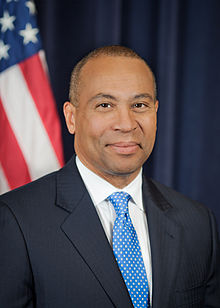
220px-Official_portrait_of_Deval_PatrickThe Governor is proposing that the state sales tax be reduced from 6.25 to to 4.5 percent, which would give the state the eleventh lowest sales tax among those states that levy a sales tax. The Governor also proposes, however, that the state income tax be increased from 5.25 to 6.25 while doubling personal exemptions and eliminating deductions that benefit select taxpayers. According to the Boston Globe, the proposal, if approved, would raise taxes on about 50 percent of residents, beginning in January 2014, with the biggest increases on upper-income earners. This would all go to support transportation and education costs as the Governor alluded to in his State of the Commonwealth address.

For general health care and home care-related items, the Governor’s budget increased funding in three MassHealth accounts (MassHealth Managed Care, MassHealth Senior Care, and MassHealth Fee-for-Service Payments) to meet projected need for those services. Such a move is in line with past years where more of a demand in MassHealth services has been a product of a recovering economy, continued expansion of state Medicaid coverage, and other factors. One item, MassHealth Nursing Home Supplemental Rates, has been decreased from the FY2013 appropriation by more than $20 million.

In terms of the Elder Affairs line items that fund the Aging Service Access Points and State Home Care Program, the Governor proposes a sizable increase to Elder Protective Services over FY13 by $4.8 million. The Prescription Advantage line item amount was reduced, according to Elder Affairs Secretary Ann Hartstein, due to changes in Medicare Part D that will absorb the state’s share. The Elder Home Care Case Management and Administration account was dropped by more than $1 million, but all other Elder Affairs accounts remained relatively level funded.

Other notable items include the elimination of the $20 million Human Services Salary Reserve. The comment on that line item is “eliminated funding due to reform,” which HCA is assuming means that the funding, or at least part of it, will be implemented elsewhere. The Alliance will continue to monitor that account and provide further information as it is released.

To see the Governor’s budget proposal and learn more about the above items, visit his FY2014 Budget webpage.

Return to www.thinkhomecare.org.

HCA Sets Improved State Policy Agenda

With a new two-year state legislative session, the Home Care Alliance has set an improved policy agenda that would strengthen the industry and asks for assistance from member agencies and fellow advocates in gathering legislative support.

boston-statehouseThe Alliance’s legislative priorities include re-filed items like the “Nurse Delegation” bill, which would allow visiting nurses to delegate certain medication administration tasks to home health and hospice aides in the home setting only. New items include establishing a “certificate of need” process for certified home health care and a state program allowing cities to grant parking leniency to clinicians visiting patients in those communities.
HCA members, friends, and advocates can assist our mission by contacting their local state senators and state representatives and ask that they cosponsor these bills. If you are unsure who represents your agency or place of residence, please visit www.wheredoivotema.com and type in your address, or contact James Fuccione at the Alliance.

 
Over the coming weeks, HCA will be alerting members about bills filed by other organizations and interest groups and will be asked to weigh in. The Alliance will, of course, continue to monitor and provide updates on the state’s health care payment reform law as it is implemented. Alliance staff and several member agencies sit on key boards, commissions and advisory groups and important information will be provided as it becomes available on those issues.

For more on HCA’s legislative priorities and how you can help, contact James Fuccione at the Alliance.

Return to www.thinkhomecare.org.

Fiscal Cliff Deal Reached with No Home Care Cuts or Copays

In the waning hours of the federal legislative session, the Senate passed an agreement to avoid the fiscal cliff that was then approved by the House with none of the feared elements concerning home health care.

The bill extends tax rates for the vast majority of citizens along with a series of other tax-related extenders and unemployment benefits. It also includes a “doc fix” through New Year’s Eve 2013.

U.S. Capitol BuildingThe agreement was approved with bipartisan support and, according to the National Association for Home Care & Hospice (NAHC), there are no cuts to Medicare home health services or hospice care benefits, payments, or payment rates. No home health copays are in this bill and there are no Medicaid cuts affecting home care. Additionally, NAHC found that protection against the Medicare outpatient therapy cap is continued through December 31, 2013.

The “doc fix” is paid for primarily through cuts to hospitals with nearly $15 billion in a combination of coding adjustments and DSH payment reductions. ESRD payments are also affected by a reduction of $4.9 billion.

The CLASS program established to help finance long term care services through a voluntary insurance approach under the Affordable Care Act is repealed under the Senate bill. The repeal has no financial consequence as CMS earlier indicated that it would not implement the CLASS program due to its inability to assure financial viability.

NAHC also notes that a very important provision in the Senate bill is the establishment of a Long Term Care Commission that will be charged with the responsibility to develop a plan for meeting the needs of the growing population of Americans needing care in the home and in other settings. The Commission will have 15 members appointed by the President and Congressional leaders with representation of consumers, older adults, family caregivers, and care providers.

For more on the fiscal cliff and the health care-related implications, see stories below:

Return to www.thinkhomecare.org.

HCA Offering Intro to MOLST

The Home Care Alliance is part of a state-run committee charged to provide education and outreach on Medical Orders for Life Sustaining Treatment (MOLST) and will be holding a free conference call for members on January 3rd from 1:00-2:00pm.

MOLSTAlliance staff who sit on the MOLST Community Outreach and Education Committee with state officials and other organizations will provide an overview of the standardized form being used to translate a patient’s life-sustaining treatment preferences into a medical order that can be honored across all healthcare settings.

Jeanne Ryan, Alliance Board Member and Executive Director of the VNA & Hospice of Cooley Dickinson, will be on the call to explain how that agency worked with their provider partners to educate their community about MOLST and related issues.

Again, the call is free for HCA members who sign up by contacting James Fuccione at the Alliance.

To download the actual form and to find more information on MOLST, visit www.molst-ma.org.

Return to www.thinkhomecare.org.

Timeline Updated for Dual-Eligible Care Demonstration

MassHealth and CMS have agreed to a new implementation timeline for the statewide demonstration to better integrate and coordinate health care services for dually eligible individuals between the ages of 21 and 64.

Obviously, the deadline for selectionselection of ICO’s, or Integrated Care Organizations, has come and gone, but the “readiness review” for those ICO’s has been extended. Previously, the demo was set to begin enrollment on April 1st, but it now appears that the state and CMS have agreed to have the first self-selected enrollments to become effective on July 1st.

See the updated timeline below and visit the state’s demonstration webpage for more info:

ICO Selection Announcement

November 2, 2012

Readiness Review

Nov. 2012 – March/April 2013

3-Way Contracts

March/April 2013

Learning Collaboratives

March 2013 – Ongoing

Implementation Activities


       Stakeholder Workgroups: Quality, Notices, Outreach, Admin. Simplification

Dec. 2012 – Ongoing

     Implementation Council

Feb. 2012 – Ongoing

     Ombudsperson

May 2013 – Ongoing

Public Awareness Campaign

April 2013 – Ongoing

Member Outreach Activities

(Members can begin to select ICOs for effective date July 1, 2013)

May 2013 – Ongoing

Self-Selected Enrollments Begin

July 1, 2013

Auto-assignments Effective

(Members notified at least 60 days prior to the effective date)

Oct. 1, 2013; Jan. 1, 2014

Sign Up for Virtual Lobby Days: Dec 5-6

The home care community needs to be involved and present a unified message as lawmakers work to address the impending “fiscal cliff.” During the post election “lame duck” session, Congress will be grappling with how to reduce burgeoning deficits and offset the costs of fixing the flawed Medicare physician payment formula, among a host of other fiscal issues. Home health copayments and payment cuts have been proposed as a means of deficit reduction and offsetting the cost of the physician fix.

Copayments have been proposed by a number of key players in the budget debate.  Specifically:

  • The National Commission on Fiscal Responsibility and Reform of 2010 (the “Bowles-Simpson plan”) recommended a uniform 20 percent copayment for all Medicare services. This would amount to a $600 copay to access an episode of Medicare home health care.
  • The Congressional Budget Office proposed a 10 percent home health copay as one of its budget options for deficit reduction, a proposal that received support from the Republican Study Committee.
  • The Medicare Payment Advisory Commission (MedPAC) has recommended a home health copay (as much as $150 per episode) for episodes not preceded by a hospital or nursing home stay.
  • The President’s September 2011 deficit reduction plan included a $100 home health copay for episodes not preceded by a hospital or nursing home stay, beginning in 2017 for newly eligible Medicare beneficiaries.  Further cuts in home health payments have also been proposed in these plans.

NAHC has scheduled a live and virtual “March on Washington” lobby day for December 5 and 6. The message to lawmakers is “Oppose Medicare home health copays and payment cuts.”

The Alliance will hold a free open conference call for members to review talking points and prepare for the virtual lobby days on Tuesday, December 4, at 3:00 p.m.  To register for this call, please email Stephanie Drakes.

We have stopped copays before, but the economic situation is dire and with the range of options on the table, the home health community needs to raise its voice collectively. Every advocacy group and every interest group will be weighing in, so remaining silent at such a critical time is not an option!

Alliance members can send a message using the NAHC Legislative Action Network (LAN).  Once you log onto the LAN, you can access talking points on home health copayments and get the Washington telephone numbers of your elected representatives.

Please encourage your colleagues, staff, friends, family and the families of your patients to visit the link above or call the office of your member of Congress and our Senators:

Sen. John Kerry – (202) 224-2742 / Boston office (617) 565-8519
Sen. Scott Brown – (202) 224-4543 / Boston office (617) 565-3170
Congressman Jim McGovern – (202) 225-6101 / Worcester office (508) 831-7356
Congressman John Tierney – (202) 225-8020 / Peabody office (978) 531-1669
Congresswoman Niki Tsongas (202) 225-3411 / Lowell Office (978) 459-0101
Congressman Ed Markey 202-225-2836 / Medford Office 781-396-2900
Congressman Mike Capuano (202) 225-5111 / Cambridge Office (617) 621-6208
Congressman Richard Neal (202) 225-5601 / Springfield office (413) 785-0325
Congressman John Olver (202) 225-5335 / Pittsfield Office (413)-442-0946
Congressman Stephen Lynch (202) 225-8273 / Boston office (617) 428-2000
Congressman Bill Keating (202) 225-3111 / Quincy Office (617) 770-3700

Return to www.thinkhomecare.org.

Boston Globe Letter on Home Health and Readmissions

The following was published in the Boston Globe on Sunday, November 11th:

To the Boston Globe:

A renewed attention on the part of the health care delivery system in general, and hospitals specifically, to keeping people who have been hospitalized from quickly returning is welcome and long overdue (“Hospitals look to lower readmission rates,” G section, Nov. 5). However, in focusing on some new programs and services, the story seemed to miss the solution with a long track record of success. For more than a century, home health care as delivered by visiting nurses and other professionals has been the most valuable and valid means to support patients and minimize complications following a stay in a hospital.

These nurses have knowledge about the patient’s health and what in the home environment may be an obstacle to a patient’s medical progress. Yet, our experience is that far fewer patients are referred for home health services than could benefit from them, generally because of a lack of understanding of qualifying rules for coverage.

As we broaden the post-acute-care safety net, it’s important to remember that visiting nurses, who heal and teach, are most successful at delivering what patients need to avoid a return hospital visit.

Patricia  Kelleher, Executive Director

Home Care Alliance of Massachusetts

Return to www.thinkhomcare.org.