House Ways & Means Releases Budget; Call Now To Support Amendments!

The state’s House Committee on Ways & Means this week released its proposed $36.2 billion fiscal year 2015 budget.

The House budget closely follows the Governor’s budget proposal in most line items related to home care providers, with slightly smaller allocations for MassHealth Senior Care Plans,boston-statehouse and EOEA Administration, and slightly more funding for local Councils on Aging. The House budget does not include the $1.2M Home Care Workforce Training Fund that was in the Governor’s budget.

Several legislative champions will be submitting amendments to the budget at the request of the Alliance. HCA members are encouraged to contact your local state representative TODAY and urge them to co-sponsor the budget priorities listed below.

A pre-written email is available on the Alliance’s Legislative Action webpage. For those choosing to call their local Representatives, please use the information below. Reps can offer formal support by contacting the office of the Representatives that are filing the amendments. Continue reading “House Ways & Means Releases Budget; Call Now To Support Amendments!”

State Senate Releases FY14 Budget Proposal

The Senate Committee on Ways & Means continued the state budget-making process today by releasing their version of the FY14 budget, which will be debated before the full Senate next week.

The $33.92 billion proposal is a $1.4 billion increase over estimated FY13 spending, but $904.3 million less than what the Governor proposed. The Senate Ways & Means version is also $67.5 million less than what the full House of Representatives approved in their budget last month.

Here are some items of note:

  • $4.5 billion for the MassHealth Managed Care line item – $39.5 million over the final House budget.
  • $2.9 billion for the MassHealth Senior Care line item – $42.5 million over the final House budget.
  • $187.2 million to fully fund the elder home care programs, an additional investment of $6.2M over FY 2013, to eliminate the current waitlist of 1,500 seniors. This includes $98.7 million for Home Care Purchased Services.
  • $10.5 million for Grants to Councils on Aging, increasing support to $8 per elder, marking the highest ever level of state support for councils on aging.
  • $2.1 billion for the MassHealth Fee-for-Service line item – $7.2 million LESS than the final House budget.
  • Level-funding the Pediatric Palliative Care Program.

The Home Care Alliance will again be working with Senators to file three budget amendments to create a home health certificate of need program, establish MassHealth reimbursement of home telehealth, and strengthening pediatric home health.

As the Alliance works over the next few days to submit these amendments, association members and advocates should be on the lookout for “advocacy alerts” with message templates that can be sent to Senate offices. Of course, more information on budget development will be released as it becomes available.

Return to www.thinkhomecare.org.

Help Get Vital Support for Home Care Amendments in FY14 House Budget

boston-statehouseA new advocacy message that home care agencies and advocates can send to their state representatives has been posted on the Home Care Alliance’s “Legislative Action Center.”

The pre-written message urging the House to support the Alliance’s budget priorities will automatically be sent to your state representative based on the contact form that you fill out after clicking the link. You will be able to review the message before sending, if you choose, and it only takes a minute of your time!

Here are HCA’s priority budget amendments:

  • Telehealth Monitoring (Amendment #341), sponsored by Rep. John Mahoney:  – establishes MassHealth reimbursement for home telehealth services provided by a home health agency.
  • Home Health Agencies Certificate of Need (Amendment #552), sponsored by Rep. Kate Hogan – establishes a “certificate of need” process for new home health agencies.
  • Pediatric Home Health Care (Amendment #609), sponsored by Rep. Michael Brady – balances the payment formula for independent practitioners and agencies providing continuous nursing to account for an agency’s overhead, including scheduling and documentation requirements.

You may also call your state representative to urge their support of any of the amendments listed above. Those unsure about who represents them can lookup their legislator and contact info at www.wheredoivotema.com. The above links to each amend includes a fact sheet with talking points you can use on the phone call.

return to www.thinkhomecare.org.


House Begins Budget Process with Reductions from Governor, Improvements Over FY13

The House Committee on Ways & Means released their proposed version of the FY 2014 state budget today and although many items are reduced from what Governor Deval Patrick proposed, most items are still an improvement over fiscal year 2013.

House Ways & Means’ $33.8 billion budget reduces the MassHealth Senior Care, MassHealth Managed Care and MassHealth Fee-for-Service line items by a total of $205.8 million from what the Governor proposed, but those items still represent a collective increase of $625.1 million above the FY13 budget.

Meanwhile, most Elder Affairs line items that fund the State Home Care Program, administered by the Aging Service Access Point network, received slight reductions. One item, Home Care Case Management and Administration, saw a $478,097 increase over what the Governor proposed, but $593,317 less than the FY2013 number.

Below are the line items, the House Ways & Means funding level, and their difference (+ or -) from the Governor’s proposal and the FY2013 budget. Also included is a brief explanation of what the line item covers.

  • MassHealth Senior Care: $2,861,335,505 (-$50 million from Governor’s budget, +$105.2 million from FY2013)

The MassHealth Senior Care item funds services for seniors on MassHealth as well as the Senior Care Options, or SCO, Program.

  • MassHealth Managed Care: $4,499,411,804 (-$53.5 from Governor’s budget, +$331.9 million from FY2013)

MassHealth Managed Care is for services provided to medical assistance recipients under the Executive Office of Health and Human Services’ primary care clinician, mental health and substance abuse plan or through a health maintenance organization under contract with the executive office and for MassHealth benefits provided to children, adolescents and adults

  • MassHealth Fee-for-Service: $2,145,499,061 (-$102.3 million from Governor’s budget, +$188 million from FY2013)

MassHealth Fee-for-Service covers other MassHealth recipients not under Senior Care or Managed Care.

  • Home Care Purchased Services: $97,780,898 (-$8,891 from Governor’s budget, NO change from FY2013)
  • Home Care Case Management: $53,145,060 (+$478,097 from Governor’s budget, -$593,317 from FY2013)

Home Care Purchased Services and Home Care Case Management fund the operation of the state’s Home Care Program and its related contracts.

The Home Care Alliance will be working with state representatives to file amendments seeking MassHealth reimbursement of home telehealth services, a certificate of need process for home health agencies in the state, and an adjustment to pediatric home health care rates.

Budget amendments will be submitted by April 12th and the Home Care Alliance will send advocacy alerts looking for emails and phone calls asking state representatives for support on our amendments the week of April 15th. The full House of Representatives will debate the budget the following week.

Stay tuned for more information and for advocacy alerts on how you can help gain support.

Return to www.thinkhomecare.org.

Governor Patrick Announces State FY14 Budget Proposal

Governor Patrick gave several hints about what his fiscal year 2014 state budget proposal might entail in his State of the Commonwealth address last week, but the announcement of his full budget plan sheds light on a bold plan.

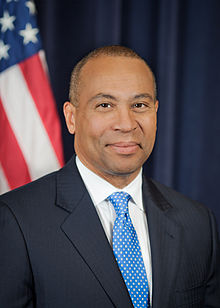
220px-Official_portrait_of_Deval_PatrickThe Governor is proposing that the state sales tax be reduced from 6.25 to to 4.5 percent, which would give the state the eleventh lowest sales tax among those states that levy a sales tax. The Governor also proposes, however, that the state income tax be increased from 5.25 to 6.25 while doubling personal exemptions and eliminating deductions that benefit select taxpayers. According to the Boston Globe, the proposal, if approved, would raise taxes on about 50 percent of residents, beginning in January 2014, with the biggest increases on upper-income earners. This would all go to support transportation and education costs as the Governor alluded to in his State of the Commonwealth address.

For general health care and home care-related items, the Governor’s budget increased funding in three MassHealth accounts (MassHealth Managed Care, MassHealth Senior Care, and MassHealth Fee-for-Service Payments) to meet projected need for those services. Such a move is in line with past years where more of a demand in MassHealth services has been a product of a recovering economy, continued expansion of state Medicaid coverage, and other factors. One item, MassHealth Nursing Home Supplemental Rates, has been decreased from the FY2013 appropriation by more than $20 million.

In terms of the Elder Affairs line items that fund the Aging Service Access Points and State Home Care Program, the Governor proposes a sizable increase to Elder Protective Services over FY13 by $4.8 million. The Prescription Advantage line item amount was reduced, according to Elder Affairs Secretary Ann Hartstein, due to changes in Medicare Part D that will absorb the state’s share. The Elder Home Care Case Management and Administration account was dropped by more than $1 million, but all other Elder Affairs accounts remained relatively level funded.

Other notable items include the elimination of the $20 million Human Services Salary Reserve. The comment on that line item is “eliminated funding due to reform,” which HCA is assuming means that the funding, or at least part of it, will be implemented elsewhere. The Alliance will continue to monitor that account and provide further information as it is released.

To see the Governor’s budget proposal and learn more about the above items, visit his FY2014 Budget webpage.

Return to www.thinkhomecare.org.

New Info Coming Soon on Money Follows the Person Initiative

The Massachusetts version of the federal Money Follows the Person initiative, held a stakeholders meeting at the Worcester Public Library with a review of activity and a “heads-up” that an RFR will be coming out next month for the five coordinating entities that will manage money and services.

Dubbed Regional Coordinating Offices, or RCO’s, these newly formed entities will provide access to housing search for MFP transitional entities along with transition assistance itself as participant move from a facility to the community. RCO’s will also provide orientation and mobility training, assistive technology, and case management. The five RCO’s will chosen by January 2013 based on an RFR due out by this November.

In February 2011, CMS awarded a five-year Money Follows the Person Demonstration grant to Massachusetts. The funding will, according to the state’s office of Health and Human Services, will help transition more than 2,200 individuals out of nursing facilities, long-term care facilities, chronic care hospitals, and intermediate care facilities into community-based care.

HCA will continue to provide updates on this program, which are also available at on mass.gov here.

Return to www.thinkhomecare.org.

Senate Passes $32.4 Billion Budget with Telehealth Reimbursement

Building off the success of getting a telehealth amendment in the Senate’s Health Care Payment Reform bill, the Home Care Alliance earned a victory with the Senate also passing a telehealth amendment during their budget deliberations.

The amendment establishes MassHealth reimbursement for telehealth services provided by home health agencies through regulations that have yet to be determined. The next step for the initiative, though, is to get through a conference committee where the House and Senate meet to hammer out the differences in their separate budget proposals. That final product is then sent to the Governor for his approval.

The Alliance will have new advocacy messages available on the Legislative Action Center once the legislature’s budget conference committee is named.

The Alliance’s other priorities pertaining to Certificate of Need, home health nursing rates past 60 days of care, and relative to pediatric home care were not passed, although the certificate of need issue is seeing increased interest. This and the passage of telehealth owe credit to the hundreds of emails sent out by HCA members and advocates through the Legislative Action Center.

The other major item that the Senate approved was the Human Service Salary Reserve worth $20 million. This account to provide a slight increase in pay for 31,500 human service workers in the state was not approved by the House and will be a huge bargaining chip in conference committee negotiations. If passed, the increase in pay would amount to about $12 per week, per worker.

Other amendments of note that passed the Senate budget include a special commission to study causes, prevention and treatment strategies pertaining to Chronic Obstructive Pulmonary Disorder (COPD). This would present an opportunity for home care to promote their chronic disease management programs and telehealth services. Also passed was an amendment that would create an advisory committee on long-term services and supports. If passed in the state’s final budget, home care agencies would have a chance to be on the committee or at least to submit data and recommendations.

Finally, other rejected amendments from the Senate included items from the state’s Home Care Program from the Executive Office of Elder Affairs that funds the ASAP programs. Specifically, the amendments for Home Care Purchased Services, Enhanced Community Options, and Case Management were all denied.

Return to www.thinkhomecare.org.

State Budget Update: Senate Ways and Means Releases Proposal for Debate

The Senate Committee on Ways and Means released their recommendations for the state’s fiscal year 2013 budget. The full 40-member Senate will introduce amendments by the end of this week and will debate the proposal beginning next week. Here are some of the highlights concerning home care:

MassHealth Line Items:

  • The MassHealth Managed Care account (line item 4000-0500) dips $6 million below what the House approved in their version at $4.158 billion.
  • The MassHealth Senior Care account (line item 4000-0600) comes in at $7,230,000 below what the House proposed at $2.756 billion.
  • The MassHealth Fee-for-Service Payments account (4000-0700) saw a bigger slash from the House version of $26.8 million, coming in at $1.927 billion.

Elder Affairs/State Home Care Program Line Items:

  • Elder Enhanced Home Care Services (9110-1500) saw a decrease from the House version of $1,327,853 set at $46.4 million.
  • The Home Care Purchased Services account (9110-1630) was also set below the House’s budget version by $497,837 at a total of $97.2 million.
  • The Elder Nutrition account (9110-1900) does not match the House’s version, but still restores a cut to that program made by the Governor. The Senate Ways and Means version is set at $6.325 million.

In summary, the Senate Ways and Means budget proposal chips down all MassHealth and Elder Affairs line items. These amounts may be restored at least partially after the full Senate concludes their debate and also following when the Senate and House name members to a conference committee to work out differences between the two budgets.

The Home Care Alliance will continue to advocate for a MassHealth nursing rate increase, Certificate of Need, Telehealth, and strengthening pediatric home care services.

Check back to the blog to find out how you can support HCA’s budget priorities.

Return to www.thinkhomecare.org.

Rate Changes in Adult Day Health, Adult Foster Care

The state’s Executive Office of Health and Human Services (EOHHS) made an announcement today regarding rates tied to Adult Day Health, Adult Foster Care and Day Habilitation.

Effective March 15, 2011, EOHHS will decrease the payment rates for adult day health (ADH) services by an average of 7.8%. According to a notice issues by the Division of Health Care Finance & Policy, the proposed rate for Basic ADH services will decrease from $53.93 to $49.98 per day (7.3%); the rate for Complex ADH services will decrease from $68.68 to $62.95 per day (8.3%); and the rate for Health Promotion and Prevention (HPP) services will decrease from $27.86 to $25.69 per day (7.8%).

For more information, see the notices below:

More information is available at the Division of Health Care Finance & Policy Regulations and Hearings website.

Return to www.thinkhomecare.org.

Federal Funding Available for CMS Care Transitions Program

There is a prime opportunity for home care agencies to apply for federal funding relative to the Centers for Medicare and Medicaid Services “Community Based Care Transitions Program.”

The $500 million CMS-based program was created under Section 3026 of the Patient Protection and Affordable Care Act, which is designed to improve care transitions between settings with the aim of reducing avoidable 30-day re-hospitalizations. The details of the program as well as direction have yet to be released, but it appears that CMS is looking for applications from health system partnerships, which must include a “community based organization.”  The statute establishing this project and the CMS preliminary information also indicates that preferences will be given to applicants that have experience with “Administration on Aging” care transitions activities. Massachusetts is one of 16 states that has such a grant operating through ASAPs/ADRC and the Massachusetts Executive Office of Elder Affairs.

Other preferences, although not stipulations, come from applications focusing on underserved and/or rural communities and applications with a clinical focus on “high-risk” Medicare beneficiaries, which are essentially defined as medically and/or socially complex patients. There is also a general Medicare beneficiary focus and partiality towards hospitals with high readmission rates.

It is essential to reiterate that agencies should start a conversation with the following entities regarding this funding opportunity:

  • Local hospitals – especially those involved in the STAAR Initiative – and/or health systems.
  • Area ASAP’s (Aging Service Access Points)
  • ADRC’s (Aging and Disability Resource Centers).

Interested agencies are urged to contact the Home Care Alliance as updates and guidance will be forthcoming. A conference call will take place next week that should provide some of that guidance, so PLEASE CONTACT US if you’re interested in participating. Again, it is up to provider teams that include a “community based organization” to assemble and submit applications.

CMS has a website with links to informative documents and presentations, which is available here.

Please contact us if you have any questions. For your convenience, the language of Section 3026 of the Affordable Care Act can be accessed here.

Return to www.thinkhomecare.org.