Advocacy Alert: Send a Message to Support Home Health Care in Senate Budget

A new advocacy message has been posted on the Home Care Alliance’s Legislative Action Center webpage and is ready to be sent off to state senators to support home health care in the senate’s FY14 budget.

HCA has three priority amendments in the Senate Budget that would create a home health care “certificate of need” process (amendment #517), establish MassHealth reimbursement for home telehealth services (amendment #718), and improve payment for pediatric home health agencies (amendment #593). The Alliance needs emails to senators to gain support for these important amendments so see the new advocacy message, fill out your contact info, and the message will automatically be sent to the senator representing you! It only takes a minute of your time and every email counts.

The Alliance is also supporting three other amendments. One would create an FMAP Trust Fund (#634) that will set up a special fund for payments from the federal government relative to health care reform, rather than having the money go into the state’s General Fund, which is less transparent. The other two amendments HCA supports would provide a rate add-on for personnel providing homemaker and personal care homemaker services to elderly clients (#544) and an amendment to boost funding for pediatric palliative care by $674,000 (#629).

Help advance home care in the state budget and send a message TODAY!

Return to www.thinkhomecare.org.

State Senate Releases FY14 Budget Proposal

The Senate Committee on Ways & Means continued the state budget-making process today by releasing their version of the FY14 budget, which will be debated before the full Senate next week.

The $33.92 billion proposal is a $1.4 billion increase over estimated FY13 spending, but $904.3 million less than what the Governor proposed. The Senate Ways & Means version is also $67.5 million less than what the full House of Representatives approved in their budget last month.

Here are some items of note:

  • $4.5 billion for the MassHealth Managed Care line item – $39.5 million over the final House budget.
  • $2.9 billion for the MassHealth Senior Care line item – $42.5 million over the final House budget.
  • $187.2 million to fully fund the elder home care programs, an additional investment of $6.2M over FY 2013, to eliminate the current waitlist of 1,500 seniors. This includes $98.7 million for Home Care Purchased Services.
  • $10.5 million for Grants to Councils on Aging, increasing support to $8 per elder, marking the highest ever level of state support for councils on aging.
  • $2.1 billion for the MassHealth Fee-for-Service line item – $7.2 million LESS than the final House budget.
  • Level-funding the Pediatric Palliative Care Program.

The Home Care Alliance will again be working with Senators to file three budget amendments to create a home health certificate of need program, establish MassHealth reimbursement of home telehealth, and strengthening pediatric home health.

As the Alliance works over the next few days to submit these amendments, association members and advocates should be on the lookout for “advocacy alerts” with message templates that can be sent to Senate offices. Of course, more information on budget development will be released as it becomes available.

Return to www.thinkhomecare.org.

Help Get Vital Support for Home Care Amendments in FY14 House Budget

boston-statehouseA new advocacy message that home care agencies and advocates can send to their state representatives has been posted on the Home Care Alliance’s “Legislative Action Center.”

The pre-written message urging the House to support the Alliance’s budget priorities will automatically be sent to your state representative based on the contact form that you fill out after clicking the link. You will be able to review the message before sending, if you choose, and it only takes a minute of your time!

Here are HCA’s priority budget amendments:

  • Telehealth Monitoring (Amendment #341), sponsored by Rep. John Mahoney:  – establishes MassHealth reimbursement for home telehealth services provided by a home health agency.
  • Home Health Agencies Certificate of Need (Amendment #552), sponsored by Rep. Kate Hogan – establishes a “certificate of need” process for new home health agencies.
  • Pediatric Home Health Care (Amendment #609), sponsored by Rep. Michael Brady – balances the payment formula for independent practitioners and agencies providing continuous nursing to account for an agency’s overhead, including scheduling and documentation requirements.

You may also call your state representative to urge their support of any of the amendments listed above. Those unsure about who represents them can lookup their legislator and contact info at www.wheredoivotema.com. The above links to each amend includes a fact sheet with talking points you can use on the phone call.

return to www.thinkhomecare.org.


House Begins Budget Process with Reductions from Governor, Improvements Over FY13

The House Committee on Ways & Means released their proposed version of the FY 2014 state budget today and although many items are reduced from what Governor Deval Patrick proposed, most items are still an improvement over fiscal year 2013.

House Ways & Means’ $33.8 billion budget reduces the MassHealth Senior Care, MassHealth Managed Care and MassHealth Fee-for-Service line items by a total of $205.8 million from what the Governor proposed, but those items still represent a collective increase of $625.1 million above the FY13 budget.

Meanwhile, most Elder Affairs line items that fund the State Home Care Program, administered by the Aging Service Access Point network, received slight reductions. One item, Home Care Case Management and Administration, saw a $478,097 increase over what the Governor proposed, but $593,317 less than the FY2013 number.

Below are the line items, the House Ways & Means funding level, and their difference (+ or -) from the Governor’s proposal and the FY2013 budget. Also included is a brief explanation of what the line item covers.

  • MassHealth Senior Care: $2,861,335,505 (-$50 million from Governor’s budget, +$105.2 million from FY2013)

The MassHealth Senior Care item funds services for seniors on MassHealth as well as the Senior Care Options, or SCO, Program.

  • MassHealth Managed Care: $4,499,411,804 (-$53.5 from Governor’s budget, +$331.9 million from FY2013)

MassHealth Managed Care is for services provided to medical assistance recipients under the Executive Office of Health and Human Services’ primary care clinician, mental health and substance abuse plan or through a health maintenance organization under contract with the executive office and for MassHealth benefits provided to children, adolescents and adults

  • MassHealth Fee-for-Service: $2,145,499,061 (-$102.3 million from Governor’s budget, +$188 million from FY2013)

MassHealth Fee-for-Service covers other MassHealth recipients not under Senior Care or Managed Care.

  • Home Care Purchased Services: $97,780,898 (-$8,891 from Governor’s budget, NO change from FY2013)
  • Home Care Case Management: $53,145,060 (+$478,097 from Governor’s budget, -$593,317 from FY2013)

Home Care Purchased Services and Home Care Case Management fund the operation of the state’s Home Care Program and its related contracts.

The Home Care Alliance will be working with state representatives to file amendments seeking MassHealth reimbursement of home telehealth services, a certificate of need process for home health agencies in the state, and an adjustment to pediatric home health care rates.

Budget amendments will be submitted by April 12th and the Home Care Alliance will send advocacy alerts looking for emails and phone calls asking state representatives for support on our amendments the week of April 15th. The full House of Representatives will debate the budget the following week.

Stay tuned for more information and for advocacy alerts on how you can help gain support.

Return to www.thinkhomecare.org.
Neighborhood Health Plan Drops Out of Dual Eligible Demonstration

Neighborhood Health Plan announced to partnering providers and organizations that they are withdrawing from the Dual Eligible Demonstration Project as an ICO, or Integrated Care Organization.

NHP was one of six groups that were working to become an ICO, but dropped out due to concern about payment rates conveyed from the state’s Executive Office of Health and Human Services (EOHHS) and the federal Centers for Medicare and Medicaid Services (CMS).

“EOHHS and CMS have acted in good faith to mitigate many of the factors involved in the rate discussions and unfortunately, for NHP, the final proposed rate structure, as projected, would result in substantial losses for NHP,” stated the emailed announcement.  “We feel that it is in our best interest at this time not to pursue the Duals demonstration further.”

The Home Care Alliance  spoke with NHP and met with other potential ICO’s with most expressing concern about the rates of payment. For months, stakeholders have been told that providers will receive no less than Medicare payments for Medicare services and no less than Medicaid payments for Medicaid services, but it is unclear if that is the case.

The Home Care Alliance will be attending the next “open stakeholder” meeting on April 19th in Shrewsbury to obtain more information.

“We strongly believe in the potential of truly integrated care models to improve care for the dually eligible and all Medicaid populations,” the NHP statement continued. “We wish your organization and the remaining ICOs much success.”

Return to www.thinkhomecare.org.

Governor Patrick Announces State FY14 Budget Proposal

Governor Patrick gave several hints about what his fiscal year 2014 state budget proposal might entail in his State of the Commonwealth address last week, but the announcement of his full budget plan sheds light on a bold plan.

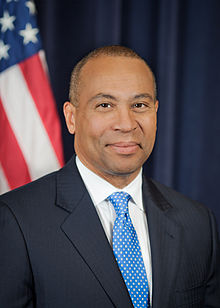
220px-Official_portrait_of_Deval_PatrickThe Governor is proposing that the state sales tax be reduced from 6.25 to to 4.5 percent, which would give the state the eleventh lowest sales tax among those states that levy a sales tax. The Governor also proposes, however, that the state income tax be increased from 5.25 to 6.25 while doubling personal exemptions and eliminating deductions that benefit select taxpayers. According to the Boston Globe, the proposal, if approved, would raise taxes on about 50 percent of residents, beginning in January 2014, with the biggest increases on upper-income earners. This would all go to support transportation and education costs as the Governor alluded to in his State of the Commonwealth address.

For general health care and home care-related items, the Governor’s budget increased funding in three MassHealth accounts (MassHealth Managed Care, MassHealth Senior Care, and MassHealth Fee-for-Service Payments) to meet projected need for those services. Such a move is in line with past years where more of a demand in MassHealth services has been a product of a recovering economy, continued expansion of state Medicaid coverage, and other factors. One item, MassHealth Nursing Home Supplemental Rates, has been decreased from the FY2013 appropriation by more than $20 million.

In terms of the Elder Affairs line items that fund the Aging Service Access Points and State Home Care Program, the Governor proposes a sizable increase to Elder Protective Services over FY13 by $4.8 million. The Prescription Advantage line item amount was reduced, according to Elder Affairs Secretary Ann Hartstein, due to changes in Medicare Part D that will absorb the state’s share. The Elder Home Care Case Management and Administration account was dropped by more than $1 million, but all other Elder Affairs accounts remained relatively level funded.

Other notable items include the elimination of the $20 million Human Services Salary Reserve. The comment on that line item is “eliminated funding due to reform,” which HCA is assuming means that the funding, or at least part of it, will be implemented elsewhere. The Alliance will continue to monitor that account and provide further information as it is released.

To see the Governor’s budget proposal and learn more about the above items, visit his FY2014 Budget webpage.

Return to www.thinkhomecare.org.

HCA Sets Improved State Policy Agenda

With a new two-year state legislative session, the Home Care Alliance has set an improved policy agenda that would strengthen the industry and asks for assistance from member agencies and fellow advocates in gathering legislative support.

boston-statehouseThe Alliance’s legislative priorities include re-filed items like the “Nurse Delegation” bill, which would allow visiting nurses to delegate certain medication administration tasks to home health and hospice aides in the home setting only. New items include establishing a “certificate of need” process for certified home health care and a state program allowing cities to grant parking leniency to clinicians visiting patients in those communities.
HCA members, friends, and advocates can assist our mission by contacting their local state senators and state representatives and ask that they cosponsor these bills. If you are unsure who represents your agency or place of residence, please visit www.wheredoivotema.com and type in your address, or contact James Fuccione at the Alliance.

 
Over the coming weeks, HCA will be alerting members about bills filed by other organizations and interest groups and will be asked to weigh in. The Alliance will, of course, continue to monitor and provide updates on the state’s health care payment reform law as it is implemented. Alliance staff and several member agencies sit on key boards, commissions and advisory groups and important information will be provided as it becomes available on those issues.

For more on HCA’s legislative priorities and how you can help, contact James Fuccione at the Alliance.

Return to www.thinkhomecare.org.

Timeline Updated for Dual-Eligible Care Demonstration

MassHealth and CMS have agreed to a new implementation timeline for the statewide demonstration to better integrate and coordinate health care services for dually eligible individuals between the ages of 21 and 64.

Obviously, the deadline for selectionselection of ICO’s, or Integrated Care Organizations, has come and gone, but the “readiness review” for those ICO’s has been extended. Previously, the demo was set to begin enrollment on April 1st, but it now appears that the state and CMS have agreed to have the first self-selected enrollments to become effective on July 1st.

See the updated timeline below and visit the state’s demonstration webpage for more info:

ICO Selection Announcement

November 2, 2012

Readiness Review

Nov. 2012 – March/April 2013

3-Way Contracts

March/April 2013

Learning Collaboratives

March 2013 – Ongoing

Implementation Activities


       Stakeholder Workgroups: Quality, Notices, Outreach, Admin. Simplification

Dec. 2012 – Ongoing

     Implementation Council

Feb. 2012 – Ongoing

     Ombudsperson

May 2013 – Ongoing

Public Awareness Campaign

April 2013 – Ongoing

Member Outreach Activities

(Members can begin to select ICOs for effective date July 1, 2013)

May 2013 – Ongoing

Self-Selected Enrollments Begin

July 1, 2013

Auto-assignments Effective

(Members notified at least 60 days prior to the effective date)

Oct. 1, 2013; Jan. 1, 2014

State Holds Health Payment Reform Info Session

Health care advocates and stakeholders packed and overflowed a large conference room meant to host an information session on the implementation progress of the new health care payment reform law.

Governor Patrick walked in mid-session and summed up the intent of the meeting where every state agency and department mentioned in the law was present to speak on their respective piece. The Governor explained that it took a lot of work to pass what he termed ‘a good bill’, but added that ‘now the real work begins.’ He said that it will take work on the part of government, providers, and stakeholders to ensure that the law is implemented effectively and the way in which it was intended.

To that end, Health and Human Services Secretary JudyAnn Bigby reported that the 11-member board of the Health Policy Commission, the main group charged with developing the policy necessary to implement the law, will be convened by November 5. The work of putting together other task forces and commissions, including those where the Home Care Alliance has the authority to name a representative, has already begun.

One of HCA’s victories in the legislation was the ability to name members on the Behavioral Health Task Force and the Commission to Review Public Payer Reimbursement Rates.

Other state agencies and their responsibilities are being reconfigured, including the Division of Health Care Financing becoming the Center for Health Information and Analysis. That group will be an independent state agency and so-called “pricing activities” relative to rate setting will move under the Executive Office of Health and Human Services.

The Alliance will provide updates as they become available and the state has an implementation website with more information at http://www.mass.gov/governor/agenda/healthcare/cost-containment/.

Return to www.thinkhomecare.org.

MassHealth To Hold Briefing on Primary Care Redesign

The Commonwealth of Massachusetts Executive Office of Health and Human Services, Office of Medicaid (MassHealth) will be hosting a town hall meeting specifically geared towards health care providers regarding the Primary Care Payment Reform initiative.  This is an opportunity for providers to interact directly with Dr. Harris and share their thoughts, comments, concerns regarding the initiative. The goals of the MassHealth Primary Care Payment Reform initiative are to improve access, patient experience, quality, and efficiency through care management and coordination, and to integrate behavioral health care with primary care. The proposed model is designed to support the delivery of primary care through practices consistent with a patient-centered medical home with integrated behavioral health services.

The first of four town hall meetings is set up to provide a general program overview which will be given by MassHealth Director Dr. Julian Harris. The details of this meeting are as follows:

Date: Wednesday, October 23, 2012

Time: 6:30– 8:00 PM

Location: Morse Institute Library

14 East Central Street, Natick, MA 01760

The web site below includes more information on this initiatives and information regarding upcoming provider town hall meetings.

http://www.mass.gov/eohhs/gov/newsroom/masshealth/providers/primary-care-payment-reform-initiative.html