CMS Responds to Congressional Letter on MD Face-to-Face

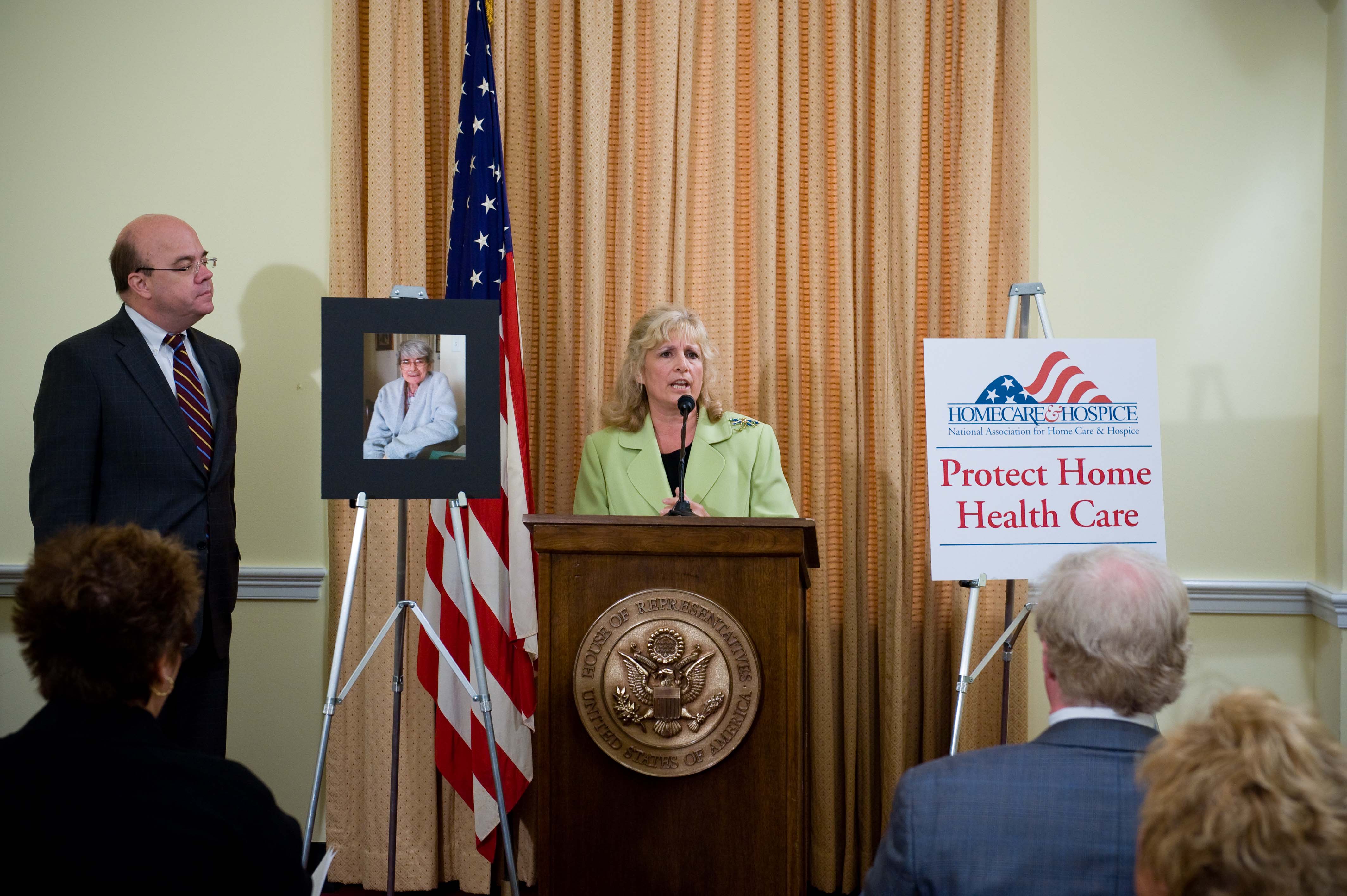
Congressman Jim McGovern, along with the rest of the state’s Congressional Delegation, received a response to a letter sent to the Centers for Medicare and Medicaid Services (CMS) that reflected the struggles of home health providers in Massachusetts relative to the physician face-to-face encounter requirement.

Unfortunately, the response from CMS is mostly a reiteration of the reasoning behind the rule and a commitment to monitor the implementation of the policy “to ensure that there are no unintended disruptions in access to medically necessary home health care for our beneficiaries.”

For more on the Physician Face-to-Face Encounter Requirement, see previous posts on the subject.

Return to www.thinkhomecare.org.

ADRs Increasing

Home Care Alliance members are reporting an increase in” additional documentation requests” or ADRs from the fiscal intermediary, NHIC.  Although there does not seem to be a pattern to the diagnoses requested, the majority are LUPAs. Additionally, many are being denied after the initial review and the first appeal.  Members are encouraged to continue the appeal process if you feel your decision has merit.

The fiscal intermediaries are required to do a certain percentage of review and it is usually around 10%.  This is in addition to the TPL process which created a backlog until recently and is why they may be “catching up” to their regular workload.

Members are encouraged to contact Helen Siegel at hsiegel@thinkhomecare.org with appeal results and/or if the number of ADRs seems unusually large.

HCA and Fred C. Church Collaborate on Promotion for WEEI Sports Radio

Thanks to Fred C. Church Insurance, the Home Care Alliance has an ad on WEEI Sports Radio (850-AM) that promotes the Alliance’s member home health agencies and especially the Home Care Accreditation Program for private pay home care agencies.

Hear the ad with the Alliance’s Associate Director Tim Burgers below, which is currently running on WEEI.

Return to www.thinkhomecare.org.

How Home Care Can Help Family Caregivers

In a moving piece at The Atlantic, Jonathan Rauch describes the enormous strain — both physical and psychological — he of being a family care giver:

In the early weeks, I was protective of his independence. He believed that confinement in a nursing home would kill him, and I understood that his autonomy was the thread by which his emotional health hung. But his motor control was not cooperating. By summer, he was having trouble getting out of bed. Many days, he relied on the maintenance man to dress him, or never managed to dress properly at all. On several occasions, I arrived in his apartment to find him lying on the floor, unable to get up. He was no longer able to manage his own mail or appointments. Often his slurred voice on the phone was barely intelligible. When I called, he would manage to pick up the phone but said only “I can’t hear you! I can’t hear you!” before hanging up. Continue reading “How Home Care Can Help Family Caregivers”

Alliance Meets with New Medicaid Director

photo of Julian HarrisThe Governor appointed a new Director of Medicaid in June and the Alliance has had the opportunity to meet with Dr. Julian Harris (pictured left) twice since he began acclimating to his new role.

HCA staff joined other advocates in a meeting that involved personal and organizational introductions to the new Director as well as a mention of a few top issues for each organization as it pertains to MassHealth activity. Prior to that, Alliance staff was among a small group of providers meeting with Health and Human Services Secretary JudyAnn Bigby and other officials on the Dual Eligibles Care Integration Project, which Dr. Harris sat in on.

According to a press release issued by the Governor’s office, Dr. Harris currently practices primary care at the Southern Jamaica Plain Community Health Center and hospitalist medicine at the Cambridge Health Alliance, both of which serve populations with high levels of participation in MassHealth and other state health programs. He is a clinical fellow on the faculty at Harvard Medical School and a senior resident in internal medicine and primary care at the Brigham and Women’s Hospital and its affiliated Southern Jamaica Plain Community Health Center. He formerly served at the World Bank, where he was charged with day-to-day management of the World Bank Institute’s AIDS program. He also worked on national health payment and delivery system reform for an international client at McKinsey & Company.

The Alliance looks forward to working with Dr. Harris on the challenges and opportunities for home care and MassHealth members.

Return to www.thinkhomecare.org.

Home Care Nurses Speak Up in Washington

As the “debate” continues in Washington over the debt ceiling and capping government spending, home care nurses added their voices to those speaking against propoals that would cut Medicare funding and impose co-payments. What is at stake are proposals by:  1) The National Commission on Fiscal Responsibility and Reform that would impose a uniform 20 percent co-pay and a uniform overall deductible of $550 for all Medicare services combined, including home health care;  or 2) the Medicare Payment Advisory Commission (MedPAC) which recommended a home health copay (as much as $150 per episode) for episodes not preceded by a hospital or nursing home stay as a means to encourage beneficiaries to control utilization of care.

Congressman James P McGovern (D-MA) a long time champion of home care spoke to the nurses saying:  “It is important that members of Congress understand that you are part of the solution,” McGovern said. McGovern said that keeping a person at home is cheaper and patients are ultimately happier.

Home Care Alliance Board member Elaine Stephens, of Overlook VNA,  represented Massachusetts at the nurses rally that also included remarks from National Association for Home Care President Val Halamandaris and Max Richtman, executive vice president and acting CEO, of the National Committee to Preserve Social Security and Medicare.

To send a message to Congress to keep home care cuts out of debt ceiling discussions, go to the Alliance’s advocacy page.

OIG Examines Hospice Services for Nursing Facility Residents

A new report from the Office of Inspector General has found that Medicare spending on hospice care for nursing facility residents has grown nearly 70 percent since 2005.  Many hospices had a high percentage of their beneficiaries residing in nursing facilities, and most of these hospices were for-profit. Compared to hospices nationwide, these high-percentage hospices:

  • received more Medicare payments
  • had a longer average length of stay
  • served Medic are patients whose diagnoses required less complex care
  • served more patients who already lived in nursing facilities before they elected hospice care.

A previous OIG study published in September, 2009, concluded that Eighty-two percent of hospice claims for beneficiaries residing in nursing facilities did not meet Medicare coverage requirements.

The OIG report notes that Medicare currently pays hospices the same rate for care provided in nursing facilities as it does for care provided in the home, but nursing facilities are staffed with professional caregivers and are often paid by third party payers, such as Medicaid. These facilities are required to provide personal care services, which are similar to hospice aide services that are paid for under the hospice benefit.

The OIG concluded that some hospices may be seeking beneficiaries with particular characteristics, including those with conditions associated with longer but less complex care. Such beneficiaries are often found in nursing facilities. By serving these beneficiaries for longer periods, the hospices receive more Medicare payments, which can contribute to larger profits.

The OIG report recommends that CMS (1) monitor hospices that depend heavily on nursing facility residents and (2) modify the payment system for hospice care in nursing facilities. CMS concurred with both of our recommendations. It also agreed that the current payment structure may provide incentives for hospices to seek out beneficiaries in nursing facilities, who often receive longer but less complex care

The OIG website has a special page devoted to Medicare hospice issues.  The page includes links to the new report, a podcast interview with Jodi Nudelman, the Region II Inspector General for Evaluation and Inspections, and several other OIG studies of hospice issues.  This is the first in a series of three studies by the OIG of hospice services to nursing facility residents.  Additional studies will examine the marketing practices of hospices that focus on nursing home residents and the business relationships of such hospices with nursing facilities.

Return to www.thinkhomecare.org.

Mass State Website Looks To Add Home Health Compare Data

At its July meeting, the Massachusetts Quality and Cost Council (QCC) put on its agenda for the coming year a plan to place CMS  Home Health Compare data on its consumer education website.  The state’s My Health Care Options website was established by the Mass QCC as a resource for patients and families looking to make informed health care choices. The majority of the data on the site to date have been on hospital and medical practice quality and costs, with a new update of these data posted in January 2011.

Home health care was identified in the QCC’s Three Year Reporting Pla as “a vital service to the aging population and  an important area of information for consumers.”  The Council is exploring options to download the CMS data in a consumer friendly format, as opposed to simply placing a CMS website link.  The costs and feasibility of this are being reviewed prior to the Council’s next meeting.

Are consumers or other referral sources using CMS data now? Will  it get more visibility on the state’s website?  What are your thoughts?

CMS Community-Based Care Transitions Program Update

The Centers for Medicare and Medicaid Services (CMS) has provided new guidance and updates on their Community-Based Care Transitions Program.https://i0.wp.com/www.gmcf.org/transitions/images/transitions_image.jpg

New panel review dates for submitting applications beyond August 18th have been posted and are as follows:

  • October 6 & 7, 2011 – Applications must be received by September 6th to be considered for this review.
  • November 15 & 16, 2011 – Applications must be received by October 14th to be considered for this review.
  • November 30 & December 1, 2011 – Applications must be received by October 28th to be considered for this review.

Secondly, more than a full page of new guidance has been added to the program’s Question & Answer section. Below are a few examples:

  • Q: How shall we anticipate to cover up front costs? I heard that CBOs would be paid a per eligible discharge rate that is determined by target population, interventions proposed, anticipated volume and expected reduction in readmissions (cost savings) Can you give a concrete example of how this payment methodology would work?

A: Because this program seeks to build off of earlier care transitions initiatives and requires applicants to have a track record in the delivery of care transition services we are not paying “start up” costs. CBOs will be paid on a monthly basis for services delivered in the previous month. This payment will be whatever the agreed upon per eligible discharge rate is multiplied by the number of eligible beneficiaries served in the previous month. Please refer to the budget worksheet available on our program webpage for additional guidance on developing the per eligible discharge rate.

A: These are the patient experience measures that CBOs will be required to collect and report during the program. We will provide the instruments to awardees at the time of award.

The Home Care Alliance has also made a webinar available on the experiences from a previous CMS care transitions demonstration program that worked through 14 QIO’s across the US. The webinar focuses on, among other things, drawing from the Home Health Quality Improvement campaign’s Best Practices Intervention Package.

More info from this newsfeed on care transitions is available here.

Return to www.thinkhomecare.org.

Gov. Patrick Signs FY12 State Budget

Governor Deval Patrick signed the state’s fiscal year 2012 budget amounting to $30.6 billion with a victory for home health.

Language that would move MassHealth one step closer to reimbursing home health agencies for telehealth services was included in the “MassHealth Managed Care” line item:

…for purposes of long-term health care cost savings and enhanced patient care, the commonwealth may recognize telehealth remote patient monitoring provided by home health agencies as a service to clients otherwise reimbursable through Medicaid

The key word in this language is “may.” MassHealth is not directly instructed in the budget to reimburse for telehealth (as if the word “shall” was used), but it presents the state with the option to do so, which means that continued advocacy will be required to push the state towards that end. This is a solid victory for the Alliance’s budget advocacy thanks to the hundreds of emails that were sent from the HCA website’s Legislative Action Center and to the office of Senator Richard Moore.

Another item of interest is in regards to Adult Day Health where the Governor approved a budget that makes “no changes prior to December 31, 2011 in the clinical eligibility or level of reimbursement paid to providers of adult day health services for basic and complex levels of care.”  The budget also imposes a temporary moratorium on enrollment of new Adult Day Health providers until such time that a study is completed by the Executive Office of Health and Human Services. The study, due to the Legislature by December 31, 2011, will provide a basis for new licensure and rate structure and also will provide a needs assessment of ADH services going forward.

For more information, the full budget is available on Mass.gov.

Return to www.thinkhomecare.org.