Talking Home Care: Pat Ahern on Palliative Care 101

Pat Ahern of Care Dimensions joins us to discuss several hospice-related issues affecting the home care industry.

Pat Ahern of Care Dimensions
Pat Ahern

Pat Ahern of Care Dimensions joins us for the eighth episode of the Talking Home Care Podcast. As the CEO of the largest and most experienced palliative care agency in the region, Pat’s an authority on palliative care, hospice, and related issues. In a conversation with Alliance Executive Director Pat Kelleher, Ahern discusses:

  • Palliative care’s role as a “midwife at the other end of life”;
  • Dementia care;
  • Payment reform;
  • Referral sources;
  • Nurse recruitment and training; and
  • Physician involvement.


You may listen to the podcast by clicking the play button below, downloading it directly, or subscribing through iTunes or Google Play. (Length: 26 minutes; Size: 12 MB). If you enjoy it, please give us a five-star review so others can find it as well.

Host: Patricia Kelleher is the Executive Director of the Home Care Alliance of Massachusetts.

GuestPatricia Ahern, joined Care Dimensions in 2017 as president and CEO. With more than 30 years of leadership in healthcare and an MBA, she has the clinical and strategic business skills, and a true passion for the mission, that enables her to provide Care Dimensions’s vision and leadership.

Resources: More information about Care Dimensions.


Talking Home Care LogoDon’t want to miss the next episode of Talking Home Care? Subscribe through iTunes, Google Play, or accessing its feed directly.

Return to www.thinkhomecare.org.

Statement on Boston Globe Article: A Stranger in the House

Boston, MA – The Home Care Alliance of Massachusetts issued the following statement in response to the two-part Boston Globe article titled “A Stranger in the House” printed September 16th and 17th:

The Home Care Alliance and its members have a zero-tolerance policy when it comes to patient abuse. Over many years we have worked with the Department of Public Health, Elder Affairs and Health and Human services to address issues of elder abuse and billing fraud. Our members take very seriously the responsibility of ensuring the safety and quality of care being delivered to their clients.

These Boston Globe articles confusingly lump three different classes of workers together: personal care attendants employed directly by consumers in the PCA program, aides hired through a home care agency, and workers hired directly by consumers in the underground marketplace.

While the article cites 20 cases of agency-hired workers committing abhorrent crimes in ‘recent years,’ it fails to contextualize the fact that home care agencies have employed over 75,000 workers and delivered care to more than 600,000 elders in the past five years.

We have long advocated for the Commonwealth to develop a licensure process and we support state legislation (H.344) which we believe would enact baseline consumer protection standards for private pay home care agencies. We also advocated for recently enacted legislation to license certified home health agencies.

In failing to adequately explain the structure of the home care system in Massachusetts, readers are left confused and scared. At a time when aging-in-place is a statewide priority, we should be working on solutions that expand access to these services and protects consumers in the setting that they prefer: home.

About the Home Care Alliance of Massachusetts:

With a mission to unite people and organizations to advance community health through care and services in the home, the Home Care Alliance of Massachusetts is a non-profit trade association and advocacy group providing representation, education, communication, advocacy and – ultimately – a voice for the state’s home health industry. Founded in 1969, the Alliance has grown to represent more than 160 home care and home health agencies across the state. For more information, visit www.thinkhomecare.org.

HCA Submits Comment on Medicare Changes; Submit Your Comments Now!

On July 1st, 2018, the Centers for Medicare and Medicaid Services (CMS) issued a proposed rule which includes several changes to the home health benefit for 2019 and beyond. The public comment period closes this Friday August 31, 2018, at 11:59 p.m. As of this blog posting, 760 comments have been submitted to CMS which is encouraging, but far from the more than 1,300 comments submitted last year in response to the HHGM proposal which was ultimately withdrawn.

You can view the HCA’s written comments here and can download the word document here.

You may submit your own comments to CMS here.

Here are some of the key changes proposed, and an overview of HCA’s response:

Home Health Wage Index Changes

  • The 2019 proposed payment rates increase by 2.1% which represents a $400 million increase.
  • HCA of MA has long expressed concerns to CMS over inequities in how the wage index is calculated for home health agencies compared to hospitals. HCA urges CMS to adjust the 2019 home health agency wage index to reflect a policy to limit the wage index disparity between provider types within a given CBSA.

Proposed Patient Driven Groupings Model (PDGM) for CY 2020

  • Implementation: As the proposed PDGM would mark a major change in the way home health agencies will be reimbursed, the HCA urges CMS to delay implementation by one year to ensure that there is no disruption in access to services for beneficiaries and evaluate the accuracy of the model and its effect.

  • LUPA Thresholds: CMS proposes to set the LUPA visit threshold at the 10th percentile for each payment group. HCA believes this is complex and will complicate the care planning process for home health agencies. HCA urges CMS to retain the current LUPA thresholds and revisit them in future years.

  • Behavioral Assumptions: CMS proposed three ‘behavioral assumptions’ in the PDGM totaling -6.42%. However, these assumptions are not based in data or evidence. HCA believes that two of the three assumptions already exist in the current PPS methodology including; that agencies are already incentivized to both report the highest playing diagnosis codes and to develop and deliver plans of care that exceed the LUPA threshold. This could result in an over estimated impact of behavioral assumptions and the HCA urges CMS to eliminate the Clinical Group Coding and LUPA threshold assumptions.

  • Split percentage payment approach: HCA believes that changing from a 60 to 30 day billing period will be very disruptive to agencies’ operations and increase back-office costs. Therefore, HCA urges CMS to continue the split payment approach at the current 60/40 and 50/50 splits for early and late periods, respectively, to give agencies cash flow breathing room.

  • Certification and Re-certification of Patient Eligibility: HCA has long advocated for regulatory language to align with sub-regulatory guidance as it relates to documentation of the patient’s eligibility. HCA is encouraged by CMS’ proposal to eliminate the requirement that the physician provide an estimate of how much longer skilled services are required and we request that CMS consider revisions to the physician’s burden of the F2F encounter as a condition of payment. 
  • Remote Patient Monitoring: HCA strongly supports the proposal to recognize remote patient monitoring costs as an administrative cost on the HHA cost report. HCA does recommend however that CMS remove the regulation that does not allow remote patient monitoring to be used as a substitute for in-person home health services. 
  • Home Health Value Based Purchasing Model: HCA has long supported the HHVBP model aiming to improve quality by giving HHAs incentives to provide better quality care. However, HCA urges CMS to modify the HHVBP to recognize stabilization in the scoring because in many cases, stabilization (instead of improvement) is an appropriate goal for some patients.

Let Our CoPs Manual Be Your Roadmap to Compliance

The Home Care Alliance of MA put together a COP Task Force consisting of an expert team of home health professionals. This task force developed guidelines to assist Home Health Agencies with the understanding on the new standards in order to stay in compliance.

Though the CoP Guide is available to Alliance members at no cost (log-in required), non-members may purchase an electronic version on our website. Upon purchase, you will receive an email with a link to download the PDF.

Return to www.thinkhomecare.org.

Join Us this June in Falmouth for NEHCC 2018

Hundreds of home health colleagues, industry experts and the leading home heath products and service vendors will be at the ninth annual New England Home Care & Hospice Conference and Trade Show at the Sea Crest Beach Hotel in Falmouth, Massachusetts, June 5-7, 2019.

We are planning another great event on the shores of Cape Cod next June. Mark your calendars and keep up with all the conference news by subscribing to our blog, following us on Facebook or on Twitter.

The conference is designed for senior and mid-level administrative and clinical staff. The conference features multiple keynote sessions, workshops, and intensive programs. Topics are designed to meet the needs of all agencies, including Medicare-certified, private duty, and hospices. The trade show is the largest home health and hospice expo in the Northeast.

Return to www.thinkhomecare.org.

Message from the Exec. Dir.: Home Care During Election Season

(Each issue of our weekly eNewsletter, Update, opens with a brief message from Pat Kelleher, reprinted below. To learn more about the news, events, legislative and regulatory updates, and career opportunities highlighted each week for our members, contact HCA Membership Coordinator Tom Meyer).

Alliance Exec. Dir. Pat Kelleher

The saying “elections have consequences” is thrown around a lot these days as a rallying cry to various constituencies to get to the polls on a specific issue, be it health care, gun ownership, or immigration. Many a TV pundit has used it in relation to – and on either side of – the coming Supreme Court confirmation battle. It’s an interesting footnote to history that the saying only entered the lexicon when uttered by our 44th President Barack Obama in a meeting very early in his presidency with Congressional Republicans who were not on board his economic plans for the country.

This is a good time to remind everyone that we have a primary election coming up in MA the Tuesday after Labor Day and a final election on Nov 6. The degree of influence our state and federal officials have over our industry, including who gets care, how it is paid for and regulated is tremendous. Anything you can do to engage with them to help them better understand what we do is important and helpful. Let your officials know who you are and that you vote!

HCA of MA will be in Washington DC in mid-September with our colleagues from other state associations to discuss federal policy issues. In the next few months, we are working with some member agencies to host membership forums on Question 1, the nurse staff ratio question. These sessions so far are scheduled for:

September 4
VNA Care, Worcester

September 18
Home Health VNA, Lawrence

September 24
NVNA & Hospice, Norwell

If you would like to host a session, please contact Jake Krilovich.

Thank you for engaging!

Pkelleher@thinkhomecare.org
Pat Kelleher
@thinkhomecare

Return to www.thinkhomecare.org.

Talking Home Care: Ryan McEniff on Running a Private Care Agency

Minute Women Home Care’s Ryan McEniff joins us to talk about the challenges of running a private home care agency in today’s economy and how families can ensure they get the best care.

Ryan McEniff of Minute Women
Ryan McEniff

How did a “big, six-foot-six, burly guy” become the owner of Minute Women Home Care? For the seventh episode of the Talking Home Care podcast, Pat Kelleher talks with Ryan McEniff about what it takes to run a successful private home care agency. Topics include:

  • Ryan’s personal story about entering the industry;
  • The challenges (and opportunities) of transitioning from family to paid home care;
  • How home care can restore clients’ work/life balance;
  • Whether home care can remain affordable to middle-class families in a bustling economy;
  • Why finding (and keeping) the best staff is sometimes a bigger challenge than attracting clients;
  • Going the extra mile to protect clients with national background checks;
  • The single most important question all families should ask when choosing an agency for their loved ones (jump ahead to 34’35” to find out); and
  • Ryan’s own podcast, The Caregiver’s Toolbox (expect Pat on an upcoming episode).


You may listen to the podcast by clicking the play button above, downloading it directly, or subscribing through iTunes or Google Play. (Length: 37 minutes; Size: 18 MB). If you enjoyed it, please give us a five-star review so others can find it as well.

Host: Patricia Kelleher is the Executive Director of the Home Care Alliance of Massachusetts.

GuestRyan McEniff has been the owner of Minute Women Home Care since 2013. He became passionate about home care when his mother needed care while battling cancer. He is also a Certified Dementia Practitioner and the host of The Caregiver’s Toolbox podcast.


Talking Home Care LogoDon’t want to miss the next episode of Talking Home Care? Subscribe through iTunes, Google Play, or accessing its feed directly.

Return to www.thinkhomecare.org.

Take the Guess-Work Out of Employee Compensation with Our 2018 Survey

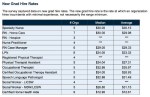
This exhaustive, timely guide gives you all the tools to ensure you make informed decisions about hiring, keeping, and compensating home health staff in Massachusetts.

The 2018 Compensation Survey is an indispensable tool for c-suite staff and HR managers, proving a quick and accurate reference of industry pay standards for your employees.

The survey contains information about prevailing pay and benefits for the full range of positions in home care agencies. It lists pay and benefits figures for dozens of positions, including: executive, administrative, supervisory, care giving, and clerical positions.

The survey is available for purchase on our website for $400 for members, $500 for non-members (members who participated in the survey should have received coupon codes with an additional discount). Make sure you have the tools you need to make the best decisions for you and your staff.

The full survey is over 200 pages. To get a sense of the available information, click the sample pages above.

Return to www.thinkhomecare.org.

Talking Home Care: Eric Scharber on Workforce Challenges: “Whoever Has the Talent Is Going to Win”

Exact Recruiting’s Eric Scharber joins us for a discussion about how to recruit and retain the best workforce from every age-group.

Eric Scharber of Exact Recruiting
Eric Scharber

For the sixth episode of the Talking Home Care podcast, Pat Kelleher talks recruiting and retention with Eric Scharber, a principal of Exact Recruiting. Topics include:

  • The advantages to employers of focusing on retention as much as recruiting
  • How small changes in retention can make a real difference to an agency’s bottom line
  • Why offering staff development is sometimes more important than pay increases
  • The challenges (and opportunities) of hiring Millennials
  • How to get graduating nurses and therapists to consider careers in home care and hospice
  • The specific challenges of retaining non-medical caregivers such as CNAs and home health aides

You may listen to the podcast by clicking the play button above, downloading it directly, or subscribing through iTunes or Google Play. (Length: 28’30”; Size: 15 MB).

Host: Patricia Kelleher is the Executive Director of the Home Care Alliance of Massachusetts.

GuestEric Scharber is a principal at Exact Recruiting, a Simione Talent Solution, where he leads talent acquisition and employee retention for the home care and hospice industry. He oversees executive search and non-executive recruiting services, as well as recruitment process outsourcing, compensation analysis, and employee satisfaction survey services.

Talking Home Care LogoDon’t want to miss the next episode of Talking Home Care? Subscribe through iTunes, Google Play, or enter the following in your podcast app: https://thinkhomecare.wordpress.com/category/talking-home-care-podcast/feed/

Return to www.thinkhomecare.org.

Advocacy Alert: Email Senators Urging Support for HCA Budget Priorities

Last week, the Massachusetts Senate Ways and Means committee released its fiscal year 2019 state budget totaling $41.4 billion dollars. Senators had a deadline of Monday to file amendments to the bill, and it will be debated next week. Three Alliance priorities have been filed as amendments. Below are brief descriptions of each, with a link to send a pre-drafted email to your state legislator. The Alliance encourages you to send an email for all three amendments.

Amendment #589: EMAC Assessment Hardship Waiver:

  • This amendment would authorize the Department of Unemployment Assistance to establish a hardship waiver for employers that provide services to EOHHS/EOEA clients, or services in the public interest, who have a financial burden as a result of their EMAC tax liability. Take Action.

Amendment #560: Enough Pay to Stay Amendment:

  • This amendment would provide $28.8 million in increased funding for the State’s home care system front-line workforce. Take Action.

Amendment #620: Continuous Skilled Nursing Funding

  • This amendment would provide a $16 million increase for the Commonwealth’s Continuous Skilled Nursing program to address the workforce shortage resulting in unfilled service hours. Take Action.