Talking Home Care: Ryan McEniff on Running a Private Care Agency

Minute Women Home Care’s Ryan McEniff joins us to talk about the challenges of running a private home care agency in today’s economy and how families can ensure they get the best care.

Ryan McEniff of Minute Women
Ryan McEniff

How did a “big, six-foot-six, burly guy” become the owner of Minute Women Home Care? For the seventh episode of the Talking Home Care podcast, Pat Kelleher talks with Ryan McEniff about what it takes to run a successful private home care agency. Topics include:

  • Ryan’s personal story about entering the industry;
  • The challenges (and opportunities) of transitioning from family to paid home care;
  • How home care can restore clients’ work/life balance;
  • Whether home care can remain affordable to middle-class families in a bustling economy;
  • Why finding (and keeping) the best staff is sometimes a bigger challenge than attracting clients;
  • Going the extra mile to protect clients with national background checks;
  • The single most important question all families should ask when choosing an agency for their loved ones (jump ahead to 34’35” to find out); and
  • Ryan’s own podcast, The Caregiver’s Toolbox (expect Pat on an upcoming episode).


You may listen to the podcast by clicking the play button above, downloading it directly, or subscribing through iTunes or Google Play. (Length: 37 minutes; Size: 18 MB). If you enjoyed it, please give us a five-star review so others can find it as well.

Host: Patricia Kelleher is the Executive Director of the Home Care Alliance of Massachusetts.

GuestRyan McEniff has been the owner of Minute Women Home Care since 2013. He became passionate about home care when his mother needed care while battling cancer. He is also a Certified Dementia Practitioner and the host of The Caregiver’s Toolbox podcast.


Talking Home Care LogoDon’t want to miss the next episode of Talking Home Care? Subscribe through iTunes, Google Play, or accessing its feed directly.

Return to www.thinkhomecare.org.
Take the Guess-Work Out of Employee Compensation with Our 2018 Survey

This exhaustive, timely guide gives you all the tools to ensure you make informed decisions about hiring, keeping, and compensating home health staff in Massachusetts.

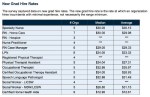
The 2018 Compensation Survey is an indispensable tool for c-suite staff and HR managers, proving a quick and accurate reference of industry pay standards for your employees.

The survey contains information about prevailing pay and benefits for the full range of positions in home care agencies. It lists pay and benefits figures for dozens of positions, including: executive, administrative, supervisory, care giving, and clerical positions.

The survey is available for purchase on our website for $400 for members, $500 for non-members (members who participated in the survey should have received coupon codes with an additional discount). Make sure you have the tools you need to make the best decisions for you and your staff.

The full survey is over 200 pages. To get a sense of the available information, click the sample pages above.

Return to www.thinkhomecare.org.

Talking Home Care: Eric Scharber on Workforce Challenges: “Whoever Has the Talent Is Going to Win”

Exact Recruiting’s Eric Scharber joins us for a discussion about how to recruit and retain the best workforce from every age-group.

Eric Scharber of Exact Recruiting
Eric Scharber

For the sixth episode of the Talking Home Care podcast, Pat Kelleher talks recruiting and retention with Eric Scharber, a principal of Exact Recruiting. Topics include:

  • The advantages to employers of focusing on retention as much as recruiting
  • How small changes in retention can make a real difference to an agency’s bottom line
  • Why offering staff development is sometimes more important than pay increases
  • The challenges (and opportunities) of hiring Millennials
  • How to get graduating nurses and therapists to consider careers in home care and hospice
  • The specific challenges of retaining non-medical caregivers such as CNAs and home health aides

You may listen to the podcast by clicking the play button above, downloading it directly, or subscribing through iTunes or Google Play. (Length: 28’30”; Size: 15 MB).

Host: Patricia Kelleher is the Executive Director of the Home Care Alliance of Massachusetts.

GuestEric Scharber is a principal at Exact Recruiting, a Simione Talent Solution, where he leads talent acquisition and employee retention for the home care and hospice industry. He oversees executive search and non-executive recruiting services, as well as recruitment process outsourcing, compensation analysis, and employee satisfaction survey services.

Talking Home Care LogoDon’t want to miss the next episode of Talking Home Care? Subscribe through iTunes, Google Play, or enter the following in your podcast app: https://thinkhomecare.wordpress.com/category/talking-home-care-podcast/feed/

Return to www.thinkhomecare.org.

This Guide Has All You Need to Find Home Care in Massachusetts

Now in its 12th edition, the Guides to Private Home Care Services have connected tens of thousands of families with the home care agencies that can help them care for their families and loved ones.

Need a primer on what home care can do? Don’t know how to pay for it? Don’t know how to select an agency, whom to trust, or what agencies are available in your are? This free directory answers all of your questions.

Click the images above to order.


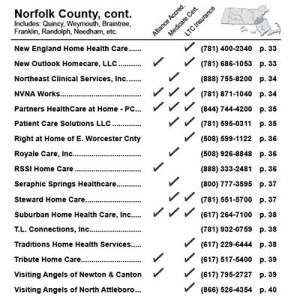
Screenshots from the directories.

Looking for something more comprehensive? the Resource Directory is intended for professionals and others who make regular referrals to home care, the Private Care Guides are designed for consumers and are always available at no charge.

Return to www.thinkhomecare.org.
Talking Home Care Episode 5: Barbara Citarella on Emergency Preparedness

Pat Kelleher talks emergency and disaster preparedness with Barbara Citarella, president of RBC Limited Healthcare & Management Consultants.

Barbara Citarella
Barbara Citarella

For the fifth episode of Talking Home Care, Pat Kelleher talks emergency and disaster preparedness with Barbara Citarella, president of RBC Limited Healthcare & Management Consultants. Topics include:

  • CMS’s 2016 preparedness operations requirements;
  • The unique challenges home care agencies face during emergencies (as well as their unique capabilities);
  • Lessons agencies can learn from recent natural disasters;
  • Home care’s ability to provide surge capacity for other health providers;
  • The biggest obstacles agencies face in implementing a disaster plan; and
  • Resources for agencies who wish to become better prepared.

You may listen to the podcast by clicking the play button above, downloading it directly, or subscribing through iTunes or Google Play. (Length: 32’45”; Size: 17 MB).

Links/Action:

Talking Home Care LogoHost: Patricia Kelleher is the Executive Director of the Home Care Alliance of Massachusetts.

Guest: Barbara Citarella is the president and founder of RBC Limited Healthcare and Management Consultants, a national leader in the home health and hospice industry in addition to disaster planning. As the only recognized expert in the area of home care and hospice disaster planning, she specializes in emergency disaster planning, bioterrorism, health care development and operations.  She provides education to law enforcement and government agencies, health care providers, private sector, first responders, national and state associations in all aspects of disaster preparedness.

Don’t want to miss the next episode of Talking Home Care? Subscribe through iTunes, Google Play, or enter the following in your podcast app: https://thinkhomecare.wordpress.com/category/talking-home-care-podcast/feed/

Return to www.thinkhomecare.org.

Advocacy Success: Governor Baker Proposes Amendment to Home Care Worker Registry

Do you ever wonder if your phone calls into legislator’s offices’ ever do anything? I certainly do. The feeling that you care so deeply about an issue and fight so hard for it, but that the effort isn’t reciprocated by our elected officials.

Or how about when you hear legislators say, “I’m waiting to hear from constituents on this issue.”… Are they really? Do they actually want to hear from us?

When advocates ask me this, I’m always one to say ‘yes, they do want to hear from you.’ But I also understand how people feel when they see common sense solutions seemingly receive no consideration.

Before I go on, I need to disclose that we have to keep fighting for this particular issue. The legislature could reject the Governor’s proposal. But the advocacy behind the recently proposed Home Care Worker Registry should answer all of these questions above and serve as a model.

As you’ve heard numerous times from the Alliance, the Massachusetts Legislature has proposed and included in its final version of the FY18 budget a Home Care Worker Registry. This registry would require agencies to submit its worker’s private information like gender and home address to the Department of Elder Affairs. We have raised numerous legal and privacy implications for this legislation and have fought throughout the budget process to defeat and modify the language.

Last week, we sent out two advocacy action alerts asking you all to send emails into Governor Baker’s office requesting him to amend this registry language and insert an opt-in option for home care workers to chose whether they want this private information disclosed to agencies, ASAP contractors or employer organizations.

In total, Alliance members sent nearly 150 emails to the governor’s office, and yesterday afternoon we found out that the Governor sent back this section to the legislature offering an opt-in amendment. It was one of 9 sections in the over $40 billion budget that he chose to amend. Think about that for a second…

This is a clear accomplishment that proves these emails and phone calls do matter. That working with coalition partners in sync can make a difference.

But remember, we have work to do on this issue, so please keep an eye out for another advocacy alert that will urge the legislature to adopt the Governor’s suggestions and protect our workers!!

So… You Want to Start a Home Care Agency?

What does it take to start a home care agency in Massachusetts? This downloadble brochure — updated for 2017 — covers the basics, including: What regulatory issues pertain; How to get paid; How to bill insurers; Where to get more help; and How the Home Care Alliance of Massachusetts can serve you one you’re up and running.

Return to www.thinkhomecare.org.

Proposed Changes Prep Mass. for Nurse Delegation

The Massachusetts Board of Registration in Nursing (BORN) has released proposed regulations that sets guidelines for, among other activities, delegation by nurses to “unlicensed personnel.” These guidelines are NOT a change in the nursing scope of practice around medication delegation, which requires a law  approved by the legislature and signed by the Governor.

The BORN is merely aiming to establish a nurse delegation framework inclusive of much more specificity in areas such as training, supervision and documentation should nurse delegation practices become allowable in Massachusetts.

The proposed regulations also protect nurses by setting criteria for delegation that includes the following:

  • Ensuring that the delegating nurse would not bear any responsibility for any deviation by the unlicensed personnel from the nursing directive, instruction, or plan of care.
  • Formalizes the nurse’s role in knowing what is within the ability of the unlicensed personnel to carry out and what can be delegated that would not require judgment or assessment by the unlicensed personnel.
  • The final decision to delegate is made by the nurse and not the employing healthcare provider.
  • The employing healthcare provider must have the competencies of the unlicensed personnel documented for each nursing activity along with periodic validation of those abilities.
  • The nurse can determine at any time that an activity can no longer be delegated based on the health status of the patient, the unlicensed personnel’s performance of the activity, or any other reason the nurse believes would jeopardize the health and safety of the patient.

The proposed regulation follows years of discussion and a BORN subcommittee report on the state’s readiness for potential changes to nursing practice.

One of the possible changes is a longstanding policy priority of the Home Care Alliance, which is to allow home health care nurses to delegate certain medication administration tasks to a trained and certified home health aide. The HCA has dubbed the proposed policy as the “Nurse Delegation Bill.”

This bill will not pass in the current legislative session that ends with the New Year in 2017, but the HCA plans to continue pursuing a change that would allow – not mandate – that home health and home care agencies can implement proper training and procedures to maximize the efficiency of their direct care staff.

It should be noted that this bill includes protections, such as the fact that delegation is limited to medications which are NOT controlled substances and are administered in the following methods:

  • Oral
  • Ophthalmic
  • Otic
  • Topical
  • Internasal
  • Transdermal
  • Suppository
  • prefilled auto-injectables designed for self-administration
  • Products which are administered by inhalation.

The legislation states that “delegation of intramuscular, subcutaneous, intradermal, intraosseous or intravenous administration of medication shall not be permitted.”

Although the Alliance has comments and suggestions for the BORN’s proposed regulations, HCA fully supports the move to ensure the state is prepared for laws that promote nurses practicing at the top of their licenses. The Alliance appreciates the BORN’s thoughtful approach that further solidifies the importance of nurses in healthcare delivery.

The BORN will hold a public hearing on October 4th and will accept written comments until October 11th.

Return to www.thinkhomecare.org.

Home Care Commission Denied in Budget, Cuts Handed to Elder Services

The merits of protecting consumers, setting minimum standards for companies and agencies providing in-home care, and controlling state costs were not enough to advance a Home Care Oversight Commission through the state budget.

The state’s FY17 Conference Committee released their final budget proposal on behalf of the legislature after regrouping in light of declining revenue projections. The Home Care Commission, which was included in the Senate budget, but not in the House, had to survive a “conference committee” of House ma budget pie chart picand Senate budget leaders that negotiated a fiscal plan between the two sides.

With Massachusetts being one of only five states without state oversight of home health care, and also with a goal to place some standards on private-pay home care, the commission would have convened legislators, home health agencies, private-pay home care, state officials, consumer groups and trade associations to recommend solutions. The language stipulated that there be separate sets of recommendations for home health and private pay home care.

Elsewhere in the budget, the declining revenue projections filtered through to hit the elder services network. Based on FY16 spending levels, a $2 million cut was made to “Elder Home Care Purchased Services” and $2.6 million reduction in the “Elder Home Care Case Management and Administration” account.

Two pieces of good news came in that Elder Protective Service got a boost of $4.5 over FY16 spending and the Pediatric Palliative Care Network received a boost of $404,578, but the Nursing and Allied Health Workforce Initiative remained leveled out at $200,000.

More silver lining came with a $1 million pilot program to test expanding income eligibility standards for services ordered by Aging Service Access Points.

In terms of MassHealth line items, the expected trends continued with the conference committee reducing the “Fee-for-Service” account by $161.7 million while increasing the accounts tied to MassHealth Managed Care ($71.1 million) and MassHealth Senior Care ($160.4 million).

Nursing Home Supplemental Rates also saw a raise with $45 million over FY16 spending.

The $39.15 billion budget now moves to the Governor for final approval and any further updates will be shared as they become available.

Return to www.thinkhomecare.org.

HCA Breaks Down MassHealth 1115 Waiver Proposal

Months of stakeholder meetings and public engagement by MassHealth has resulted in a long-awaited draft proposal that aims to completely restructure the state’s Medicaid program.

Known as the Section 1115 Waiver, the 90-plus page document outlines a possible multi-year agreement  with the federal Centers for Medicare and Medicaid Services (CMS). The focus of the proposal is a move towards accountable care organizations (ACOs) and alternative payments while better addressing the needs of MassHealth members and putting in place a financially sustainable system of health care and support services.

Before the agreement can be made with CMS, however, there is a public comment period that runs until July 17th. The Home Care Alliance created a breakdown of the proposal so that members and advocates can better understand the key provisions.

MassHealth also provided a more basic fact sheet available on their 1115 Waiver Proposal webpage that also includes the full document and slide decks from previous public meetings.

The proposal attempts to seize an opportunity for new funding streams to support the creation of three types of ACOs that are required to partner with existing providers of behavioral health (BH) and long-term services and supports (LTSS). The state aims to rearrange provider and managed care relationships to set forth a better coordinated and integrated set of networks.

The first “pilot ACOs” are expected by MassHealth to come online later in 2016, while the full roll-out of the three ACO models, enhanced funding, and BH/LTSS integration will take place in October 2017.

The Alliance was appointed to several of the MassHealth stakeholder groups and plans to submit comments on the proposal on behalf of home care.

Return to www.thinkhomecare.org.